


What Bollards Are and Why They’re So Important
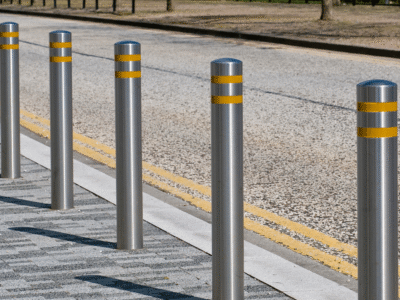
Bollards are strong, vertical posts typically made of metal, concrete, or some other durable material. These barriers serve various purposes, including controlling traffic flow, guiding pedestrians, and, most importantly, preventing vehicle intrusions.
Bollards are strategically placed along sidewalks, roadways, or building perimeters to act as barriers against unauthorized vehicle access. This safeguards pedestrians and structures from accidental or intentional collisions. The sturdy design and visibility of bollards also effectively improve safety in urban environments, public spaces, and sensitive areas where vehicular security is a priority.
Most Common Types of Bollards
Bollards vary in type, depending on the specific function they are meant to perform:
- Fixed Bollards: These are permanent fixtures anchored into the ground, creating a barrier restricting vehicle access.
- Removable Bollards: These can be temporarily removed to allow access to authorized vehicles or events, then replaced to maintain security.
- Flexible Bollards: These are designed to bend or absorb impact and are typically made from materials like plastic or rubber. They are used in areas with lower vehicle speeds to delineate lanes or protect pedestrians while minimizing vehicle damage in case of impact.
What Accidents Do Bollards Help Prevent?
Different types of bollards are employed to protect against various risks. Common accidents that bollards are designed to prevent include:
- Vehicle-Related Accidents: Fixed bollards are commonly used to prevent vehicles from entering pedestrian zones or crashing into storefronts. These bollards are anchored firmly into the ground, creating a permanent barrier that vehicles cannot bypass.
- Cyclist Accidents: Fixed bollards provide a physical barrier between sidewalks and roads, ensuring pedestrian safety by preventing vehicles from inadvertently crossing onto pedestrian walkways.
- Property Damage: Fixed bollards are ideal to protect buildings, monuments, or other structures from accidental collisions. Their sturdy construction ensures that even deliberate ramming attempts are thwarted.
- Terrorism or Deliberate Attacks: Bollards with high-impact resistance are typically used to protect against attacks. Fixed bollards of solid materials like concrete or steel are installed to create a robust perimeter barrier around sensitive locations, effectively deterring vehicle-borne threats.
Link Between Premises Liability and Bollards
Premises liability holds property owners accountable for maintaining safe conditions on their premises. This legal principle mandates that owners have a duty to address known hazards or risks to prevent harm to visitors or customers.
The absence, improper maintenance, or inadequate use of bollards can contribute to accidents or injuries, potentially leading to premises liability claims against the property owner or manager. Bollards can contribute to a premises liability claim in the following ways:
- Vehicle Collisions: When a property lacks bollards, there’s a heightened risk of vehicles accidentally crashing into the building or storefront. Without protective barriers, such incidents can cause significant harm, including injuries to pedestrians nearby or damage to property. Property owners may be liable for failing to install bollards as a preventive measure against such accidents.
- Pedestrian Safety: In areas with heavy pedestrian traffic, bollards are a critical feature that separates walking areas from vehicle movement. A vehicle may veer off the road and strike pedestrians if bollards are not installed. If a bollard fails to adequately protect pedestrians, it can lead to liability claims against the property owner for neglecting safety measures.
- Accessibility Issues: Removable bollards pose hazards to pedestrians and vehicles when improperly maintained or left in disrepair. Additionally, damaged or wrongly placed bollards can obstruct pathways or fail to provide adequate traffic control, increasing the risk of accidents. Property owners are responsible for ensuring that bollards are in proper working condition to prevent such hazards.
- Security Concerns: Bollards are often installed to enhance security by preventing any unauthorized vehicle access to sensitive areas. However, if bollards are poorly maintained, damaged, or improperly installed, they may fail to serve this purpose effectively. This situation can lead to security breaches or incidents where vehicles gain unauthorized entry, potentially exposing the property to security liabilities.
- Event Management: Removable bollards control vehicle access and ensure pedestrian safety during events or gatherings. Accidents can occur if these bollards are not correctly utilized or managed, such as being left in improper positions or failing to restrict vehicular access adequately. Property owners are liable for ensuring proper traffic management during events to mitigate risks and prevent accidents that could result in liability claims.
Premises Liability Lawyers in Atlanta Can Help You Win
If you’ve suffered an injury due to the improper use of a bollard, consult Grant Law Office for legal representation. Our firm has been helping Atlanta injury victims get the compensation they deserve for over 20 years. Lead attorney Wayne Grant has over 30 years of legal experience. He is also in the top 5% of attorneys in Georgia, as chosen by his peers and through independent research conducted by Super Lawyers.
Call Grant Law Office at (404) 995-3955 for a free consultation today. Our Atlanta premises liability lawyers have the track record to help.
Contact us today for a free and comprehensive case evaluation.
We require no legal retainer or upfront fees,
and you pay nothing unless we prevail.
Phone: (404) 995-3955

Categories
- ATV Accident
- Auto Accidents
- Bicycle Accident
- Birth Injury
- Burn Injury
- Bus Accident
- Child Injury
- Construction Accidents
- Distracted Driving Accidents
- Firm News
- Hit-and-Run Accident
- Holiday Events
- Insurance Bad Faith
- Legal Updates
- Medical Malpractice
- Mesothelioma
- Motorcycle Accidents
- Nursing Home Abuse
- Pedestrian Accidents
- Personal Injury
- Premises Liability
- Product Liability
- Spinal Cord Injury
- Traumatic Brain Injury
- Truck Accidents
- Wayne Grant Education
- Wrongful Death


